3 ways AI helps safety teams learn more from every event—and improve as a result

By Mike Personett, Senior Vice President, Safety and Reliability Solutions, Press Ganey
Every safety event gives us the chance to prevent the next one. Seizing that opportunity requires understanding what happened, why it happened, and what needs to change.
AI is helping healthcare organizations uncover risks that might otherwise go unnoticed, bringing more information into view from event reports, patient records, and other sources. That broader view creates an opportunity to understand where care breaks down—and what needs to change to make it safer. The challenge is turning that information into learning and action.
Most health systems insist on human review of every event report. Serious harm events demand attention, but near misses and low-harm events also reveal vulnerabilities worth investigating. But giving each report the attention it deserves takes time and expertise—resources safety teams don’t have in unlimited supply. When review volumes exceed that capacity, reports can accumulate with little follow-up, and systems designed to drive learning instead become data repositories.
AI gives safety teams the tools to dig deeper and learn more by strengthening event review, filling gaps in analysis, and prioritizing cases for deeper investigation.
What scalable learning requires
Scalable learning doesn’t mean removing people from the process. Far from it! It means reducing administrative work so safety teams can spend more time investigating events, following up, and learning from each so they don’t happen again. AI can help by providing consistent, system-focused guidance while leaving judgment in human hands.
1. Supporting event review and analysis
Safety event reviews, from initial triage through root cause analysis, can vary in depth and consistency. Some analyses over-index on individual performance while missing system contributors. Others are limited by what was known at the time of the initial report rather than follow-up discussions. Press Ganey’s PSO report illustrates why that distinction is so important. Inadequate checks increased as a system contributor, and checking-related issues appeared across all three leading professions’ key activities.
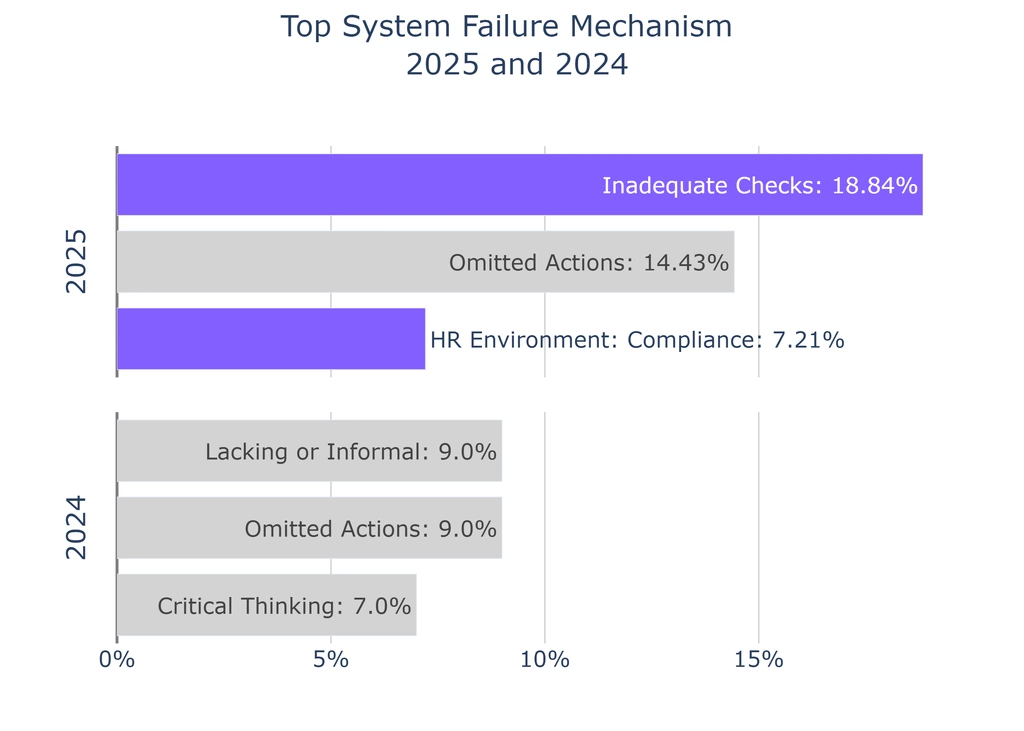
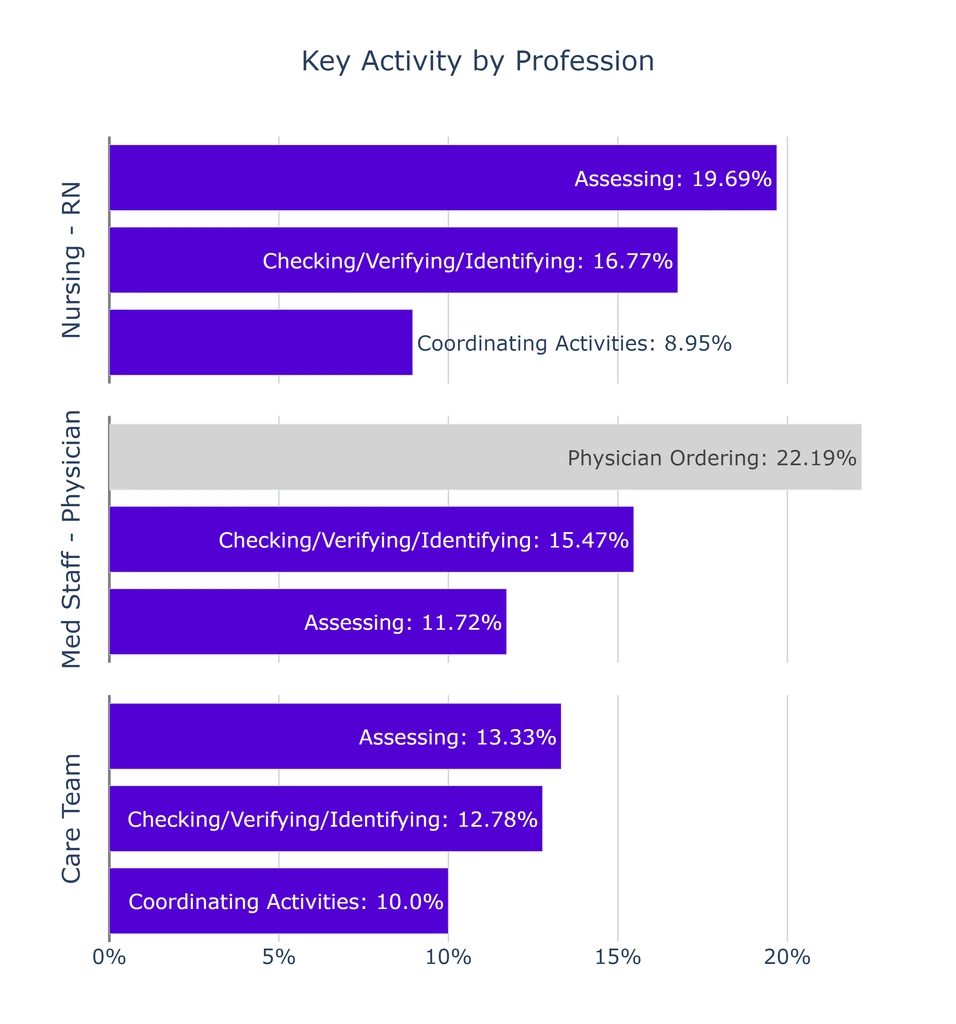
AI can support reviewers by guiding them through event review and causal analysis to capture a more robust story in the event report. The information collected a few days after the initial report, especially following discussions with those involved, can then provide a much deeper understanding of the event.
AI can also help synthesize relevant patient chart information and generate a timeline of events, calling attention to conflicting information, missed steps, or potential gaps in care protocols. That can save manual review time while helping reviewers focus on the details most likely to enrich the analysis or alter the follow-up.
2. Strengthening the quality of event analysis
Another function of AI: helping reviewers assess whether a safety event analysis is complete. For example, it can flag whether a review includes a clear description of what happened, whether contributing factors are well described, whether conclusions are tied to evidence, and whether action plans address system causes, rather than relying only on reminders, retraining, or individual accountability.
This doesn’t replace expert review, of course. Instead, it gives safety teams a scalable way to improve consistency, coach reviewers, empower care teams to improve locally, and identify analyses that may need additional attention.
A thorough event analysis gives safety teams more to learn from. AI can help reviewers see what needs to be strengthened before they draw conclusions or develop action plans.
3. Prioritizing reviews responsibly
AI models can help safety teams decide which reports to review first, in ways that go beyond basic severity classification. For example, it can evaluate review patterns in real time and prioritize events based on severity, location, event type, recurrence, and available review capacity.
But teams also need to see what’s waiting for review, and a responsible prioritization model shouldn’t just be a faster version of severity sorting. Near misses and lower-severity events can expose system vulnerabilities. AI can help teams respond to visible, urgent events while keeping an eye on those early warning signs.
Humans should stay in control
For AI to improve safety learning, support needs to be embedded in the review workflow. For example, in Press Ganey’s High Reliability Platform, Safety Coach supports reviewers in classification, root cause analysis, and action planning while keeping humans in control of judgment, edits, and final decisions.
The goal isn’t to automate safety judgment. The goal is to help reviewers work more consistently, ask better questions, and focus their time where learning and action are most needed.
Beyond event reporting, scalable learning is the next step. When safety systems become learning systems, reports are not just stored. They are used to understand risk, strengthen follow-up, and guide improvement across the organization.
By connecting what teams learn across similar events, organizations can move beyond individual reports and address the patterns that put patients at risk. To learn more about turning safety reports into safer experiences and address the patterns that put people at risk, reach out to a Press Ganey safety and high reliability expert.
This is the second post in a three-part series on how artificial intelligence can strengthen healthcare safety. In the next article, we’ll explore how AI can find the common patterns driving events to boost the value of learning from a single event to apply to the underlying pattern of many. Read part 1 here >>