Safety Coach: How AI can help prevent harm at scale
By Tejal Gandhi, MD, Chief Safety and Transformation Officer, Press Ganey
Every safety event has a story to tell.
Behind every report, every data point, is a patient, a family member, or an employee who experienced something that didn’t go as intended. Historically, healthcare organizations have invested significant efforts in reviewing these events—conducting root cause analysis, looking for ways to fix the problems, and identifying opportunities to improve care. However, many continue to struggle with a fundamental challenge: How do we move from learning about individual events to preventing them?
The challenge is compounded by organizations having to manage ever-growing volumes of reported safety events, while balancing limited resources, mounting workforce pressures, and high expectations can make it difficult to keep pace with the learning needed to prevent harm. The result is often a reactive approach—focusing intensive review efforts on a small subset of events while countless others remain unanalyzed, making it harder to uncover system-level issues.
Preventing harm at scale depends on our ability to see beyond individual incidents and find the patterns behind recurring harm.
The next evolution of safety learning
We know that the best path to creating a safer environment for patients and employees is a system-wide commitment to learning. The problem has always been scale.
Traditional event review processes can be time-consuming and highly dependent on individual expertise. Different reviewers may classify similar events differently. Root cause analyses can vary in depth and consistency. And valuable insights generated from one event may never be connected to similar events occurring elsewhere in the organization.
This is where technology—and particularly artificial intelligence—has the potential to transform safety improvement. AI’s role in this context is not to replace human judgment, but strengthen it by helping teams work more efficiently.
An AI-powered solution to prevent harm at scale
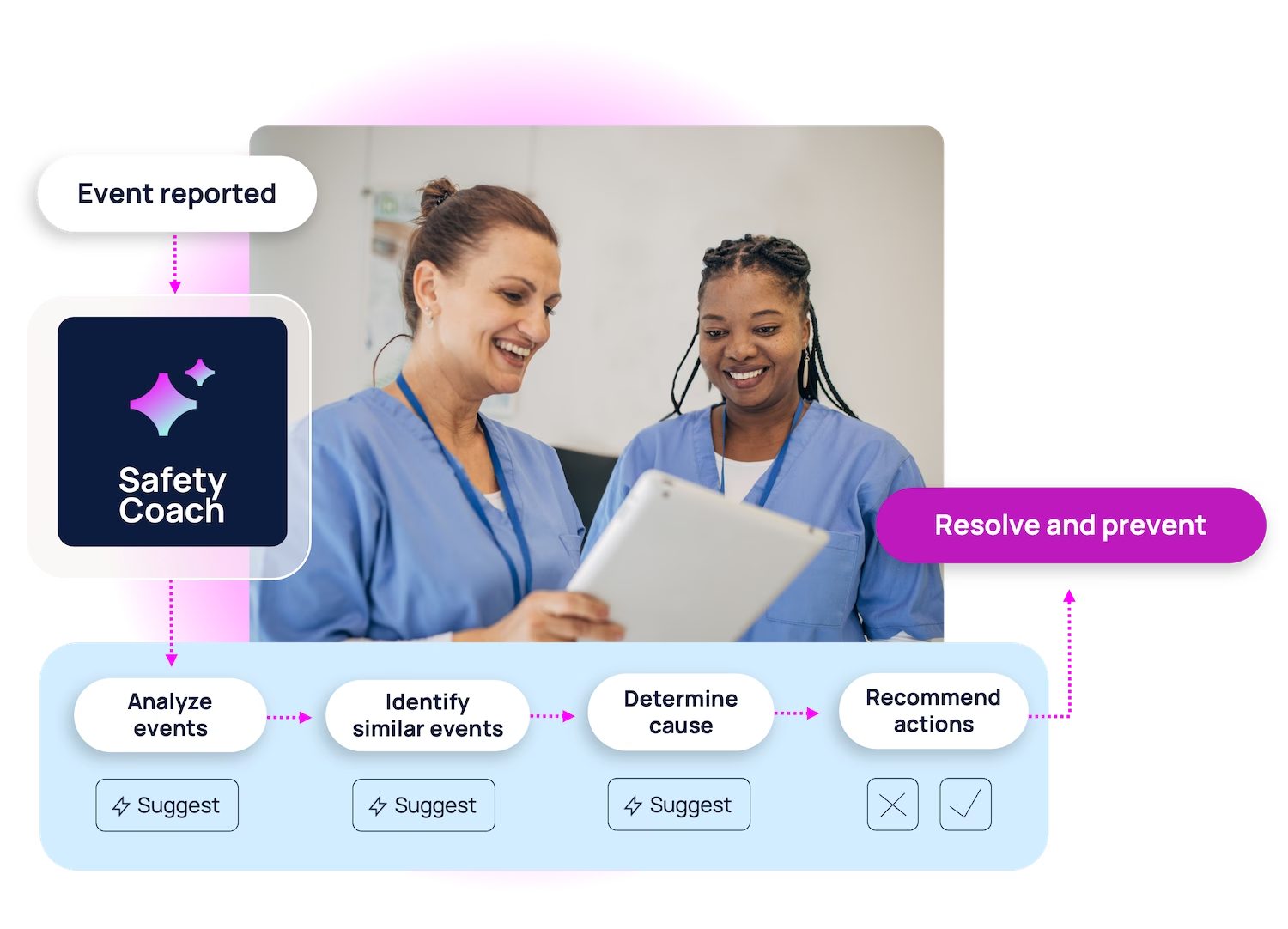
Press Ganey’s Safety Coach was designed with this challenge in mind. Embedded within the High Reliability Platform™ (HRP), Safety Coach brings AI-powered guidance directly into the safety workflow, helping organizations streamline event reviews, strengthen root cause analyses, and identify opportunities for systemwide improvement.
Safety Coach supports teams throughout the review process through:
- More accurate, consistent event classification. Safety Coach automatically predicts event severity and type, reducing the inconsistency that comes from reviewer-to-reviewer variation.
- Stronger, more rigorous root cause analyses. Step-by-step guidance through high reliability methods means review quality no longer depends on who happens to be doing the reviewing.
- Shorter timelines from insight to outcome. AI-surfaced action planning at both the event and system level compresses the gap between learning something and doing something about it.
- No adoption friction. Embedded directly within the High Reliability Platform, Safety Coach works inside the workflow safety teams already use—no new tools, no parallel processes.
Importantly, Safety Coach keeps safety professionals at the center of decision-making. AI provides recommendations and guidance, while reviewers validate findings and determine the appropriate path forward.
This balance between technology and human expertise and rationale is essential. The goal is to free up safety leaders to focus on the more consequential things: understanding risk, engaging teams, and preventing harm.
Expanding learning beyond single events
One of the most promising aspects of Safety Coach is its ability to help organizations learn from patterns instead of isolated incidents.
By analyzing similarities across events, Safety Coach helps teams connect the dots. Learning generated from a single event can be expanded across hundreds of related reports, providing a more complete picture of underlying system vulnerabilities. This shift—from event-level learning to system-level learning—is critical for organizations seeking to reduce harm at scale.
Strengthening trust through feedback
Analysis is key to safety improvement. So is engagement.
When front-line staff take the time to report concerns, they want to know their voices are being heard and that action is being taken. Too often, reporting systems can feel like a one-way process, leading to frustration and disengagement.
Organizations using Safety Coach are already reporting improvements in how they communicate findings and actions back to staff. Stronger feedback loops reinforce trust, encourage reporting, and strengthen safety culture.
A healthy reporting culture depends on the belief that speaking up leads to meaningful improvement. Technology that helps organizations close the loop more effectively can play an important role in sustaining that trust.
AI technology in service of safer care
There’s certainly no shortage of safety data to learn from. What many organizations need now is a faster, more consistent way to act on that data, and turn it into meaningful, sustainable improvement.
As health systems continue their journey toward zero harm, success will depend on their ability to learn more effectively, identify risk earlier, and implement improvements that address fissures in the broader system.
AI-powered technologies like Safety Coach represent an important step forward because they amplify human expertise.
The future of safety lies in combining the strengths of people, processes, and technology to create learning systems capable of preventing harm at scale. By helping organizations move from isolated event-by-event review to systemwide improvement, Safety Coach offers a new way to advance that vision.