AI is a leadership race, not a technology one
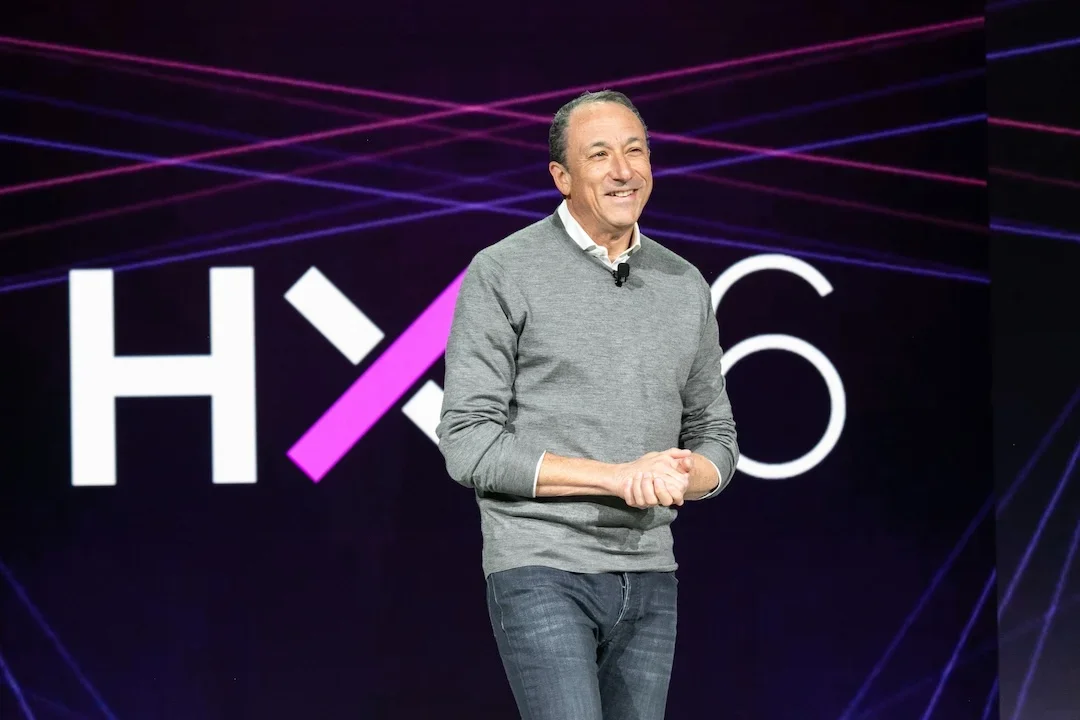
By Darren Dworkin, President and Chief Operating Officer, Press Ganey
Healthcare is not short on data.
It is short on time, capacity, and clarity.
Every day, extraordinary clinicians and leaders are asked to do more—with tighter margins, fewer people, and rising expectations from patients, families, regulators, and staff.
And too often, we ask them to spend that precious time searching for insight instead of acting on it.
This is not a conversation about technology.
It is a conversation about leadership—and how AI can help us move from insight to action.
We don’t have a data problem
Healthcare delivery in the United States now consumes nearly 20% of GDP. Costs continue to rise faster than inflation and faster than wages. And more than 60% of total healthcare cost is labor-related.
Not because people are inefficient.
But because humans are doing work that machines can now do better:
- Reading thousands of comments
- Writing summaries and reports
- Tracking follow-ups
- Monitoring whether actions worked
For the first time, AI gives us a real opportunity to reduce the cost of healthcare delivery without compromise—while improving care quality and the Human Experience.
This is about removing friction.
Across industries—and increasingly in healthcare—we are seeing consistent results:
- 50% of current work tasks are automatable by AI
- Up to a 90% reduction in content creation time
- As much as a 10x improvement in customer response rates
These are not future promises.
These are outcomes being achieved today.
The implication for healthcare is profound.
AI gives us back capacity—the most constrained resource in our system.
Things are moving fast, and at times it may feel like a race.
But this is not a technology race.
It is a leadership one.
4 AI capabilities that matter
At its core, AI in healthcare can be understood through four themes:
Summarize.
Compose.
Recommend.
Act.
Each is powerful on its own. Together, they transform how leaders lead.
1. Summarize: “What do I need to know?”
Healthcare generates oceans of data—surveys, comments, safety events, rounding notes, call transcripts.
A recent study in JAMIA noted that one in five patients has a medical record longer than Moby Dick—a 600-page, 200,000-word novel.
AI’s first superpower is simple and transformative.
It answers the question:
“What do I need to know?”
Not a PowerPoint.
Not a spreadsheet.
Just a clear narrative.
AI distills signal from noise. It surfaces themes. It clarifies risk. It turns volume into meaning.
Because the issue was never access to data.
It was clarity.
2. Compose: Turning insight into communication
Insights only matter if they can be communicated.
AI helps leaders:
- Create executive summaries
- Translate insight into clear action plans
- Align teams around a shared story
This is how insight becomes leadership communication.
Especially powerful at the front lines of care delivery.
When leaders can rapidly turn data into clear direction, momentum builds. Learning accelerates. Improvement scales.
3. Recommend: Focus is everything
AI doesn’t just explain what happened.
It identifies what matters most—and what doesn’t.
It surfaces interventions that correlate with improvement.
It helps leaders focus attention where it will have the greatest impact.
And that focus is everything.
Dashboards helped us measure.
But somewhere along the way, we started confusing access to data with clarity.
AI did not enter healthcare because we lack information.
It entered because we lack time.
The future is not static data.
It’s conversation.
Leaders can now ask:
- Why did experience change?
- Where is risk emerging?
- What should we do next?
And receive answers grounded in evidence, context, and expertise.
This is a fundamental shift. Data becomes interactive. Insight becomes dynamic. Leadership becomes proactive.
AI agents working together behind the scenes combine structured data, unstructured feedback, emerging patterns, and best practice—changing what leaders can expect from information.
It’s no longer limited to explaining what already happened.
It can now help leaders understand where momentum is building, where risk may be emerging, and what deserves attention next.
And because these conversations are grounded in evidence and context, they don’t stop at explanation.
They support judgment.
They inform decisions.
They act as a trusted advisor.
4. Act: From insight to action
This is the most important shift.
AI that summarizes, composes, and recommends is powerful.
But AI that acts changes everything.
Agentic AI can:
- Route issues to the right leader
- Trigger workflows automatically
- Monitor outcomes over time
- Close the loop without added burden
Not more work.
Less friction.
This is AI as a system of action, not just a system of record.
The future is fewer interruptions and richer signal. Insight captured in the moment, continuously and contextually.
Here’s the big shift:
Insight alone is no longer impressive.
Action is.
If your system still relies on someone noticing a problem, emailing a spreadsheet, scheduling a meeting, and counting on someone to follow up—you are not alone.
But the future is systems that see problems, route them, fix them, and check if they worked.
All without heroic effort.
No chasing.
No escalation theater.
No “follow-up emails.”
Leaders stop reacting.
Teams stop firefighting.
Patients stop feeling like they’re navigating a maze.
Work feels manageable again.
Which, frankly, is revolutionary.
AI does not replace expertise. It amplifies it.
AI does not create expertise.
It amplifies it.
The winners will be organizations with:
- Deep domain knowledge
- Trusted data
- Proven operating models
The differentiator will not be who has AI.
It will be who uses it wisely.
Healthcare does not have a data problem.
We have a “what do we do with all this data?” problem.
We are drowning in information and starving for action.
If data alone improved healthcare, we would have solved everything by now.
The future listens and gathers while things are happening.
The future is surfaced insights and automated action.
And despite all the headlines, AI does not want your job.
It wants:
- Your documentation
- Your reporting
- Your follow-up tracking
- Your 19-step workflow
AI loves the work we hate.
The future of healthcare will not be built by the organizations with the most tools.
It will be built by the ones who made work easier for the people doing it.
And when we do this right, no one will say:
“Wow, AI changed healthcare.”
They’ll say:
Work feels calmer.
Care is safer.
The Human Experience feels better.
And honestly?
That’s always been the purpose.